
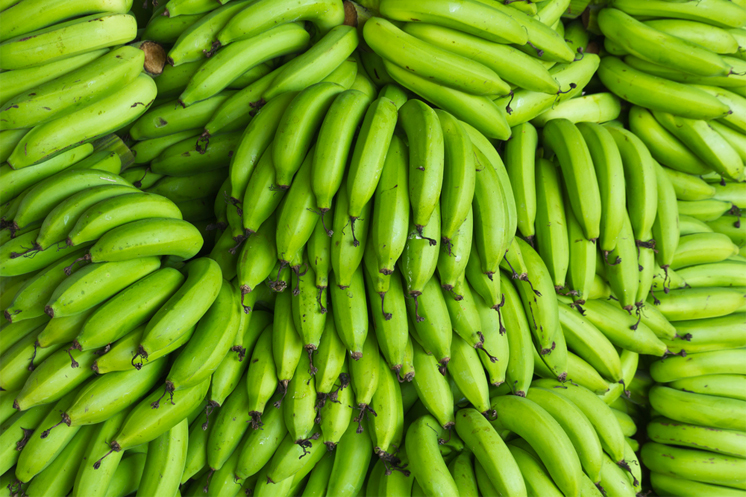
Bananas (Musa spp.) are one of the most widely consumed fruits globally and a vital staple food in many tropical and subtropical regions. Native to Southeast Asia, particularly around modern-day Malaysia, Indonesia, and the Philippines, bananas have been cultivated for thousands of years and spread across the tropics through human migration and trade. They belong to the Musaceae family and grow on large, herbaceous plants often mistaken for trees due to their height and structure, though the “trunk” is actually a pseudostem made of tightly packed leaf bases. The banana fruit develops in hanging clusters, with each finger-shaped fruit encased in a thick peel and containing soft, starchy or sweet flesh. Most commercially grown bananas, especially the popular Cavendish variety, are seedless and propagated through cloning, which makes them genetically uniform—and vulnerable to diseases like Panama disease (Tropical Race 4), a major threat to global banana production.
Nutritionally, bananas are rich in potassium, vitamin B6, vitamin C, and dietary fiber, making them excellent for heart health, digestion, and energy. They contain natural sugars like sucrose, fructose, and glucose, which provide a quick source of energy, especially favored by athletes. Unripe (green) bananas are higher in resistant starch and are often used in cooking in many cultures, particularly in savory dishes. Bananas also contain antioxidants such as dopamine and catechins, which may support overall cellular health. The banana plant is incredibly versatile—its leaves are used as biodegradable plates and wrappers in traditional cooking, and its fibers are used in textiles and paper production.