
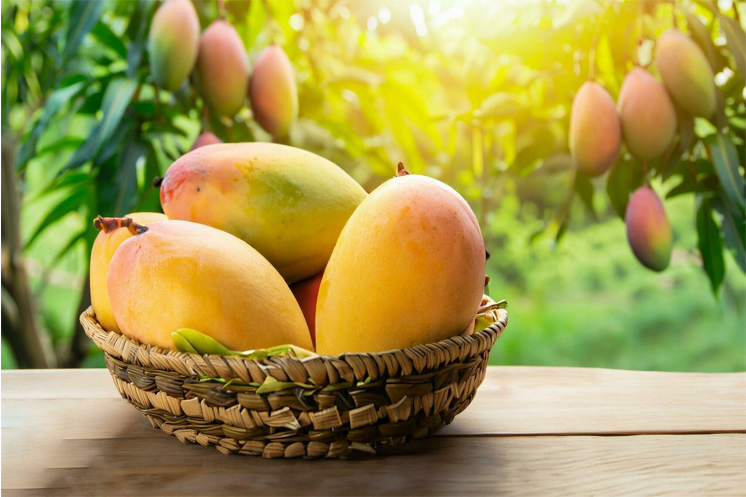
Mango (Mangifera indica) is a tropical fruit revered as the "king of fruits" due to its rich flavor, vibrant color, cultural significance, and nutritional value. Native to South Asia, particularly the region that includes present-day India, Myanmar, and Bangladesh, the mango has been cultivated for over 4,000 years and holds deep cultural and religious importance in Hinduism and South Asian traditions. It belongs to the Anacardiaceae family, which also includes cashews and pistachios. The mango tree is a large, long-living evergreen that can reach heights of up to 30 meters, and it produces fruit that varies widely in shape, size, color, and taste depending on the variety. The fruit has a smooth, leathery skin that ranges from green to yellow, red, or orange, and inside is a juicy, aromatic pulp surrounding a large central seed.
Nutritionally, mangoes are rich in vitamins—particularly vitamin C and vitamin A (from beta-carotene)—as well as fiber, potassium, and powerful polyphenols like mangiferin, which has antioxidant, anti-inflammatory, and potential anti-cancer properties. The fruit supports immune function, skin health, digestion, and eye health, and the enzymes in mango, such as amylases, help break down carbohydrates. Mangoes are consumed fresh, in smoothies, salads, desserts, and chutneys, or processed into juice, dried slices, pickles, and pulp for commercial use. In some cultures, unripe green mangoes are used in savory dishes, sauces, and spice blends due to their tangy flavor.