
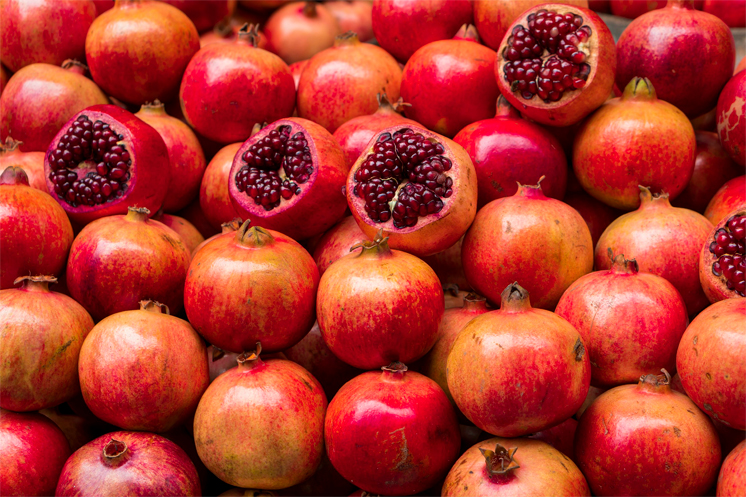
Pomegranate (Punica granatum) is a nutrient-rich, ancient fruit known for its vibrant red seeds and remarkable health benefits. Believed to have originated in Iran and northern India, it has been cultivated for over 4,000 years and holds significant cultural, medicinal, and religious importance in various civilizations, including those of ancient Egypt, Greece, Persia, and India. Today, pomegranate is widely grown in India, Iran, China, Turkey, and Mediterranean regions, with India being one of the largest producers, especially in Maharashtra, Karnataka, Gujarat, and Andhra Pradesh.
The fruit consists of a hard outer rind encasing hundreds of juicy, ruby-red arils (seed casings), which are the edible part. Pomegranate is rich in vitamin C, vitamin K, potassium, folate, and dietary fiber, but its most powerful components are its antioxidants, particularly punicalagins and anthocyanins, which give the fruit its deep color and medicinal properties. These compounds contribute to heart health, reduced inflammation, lower blood pressure, improved memory, and even anti-cancer effects. Pomegranate juice, in particular, has been shown to have three times more antioxidant activity than red wine or green tea.