
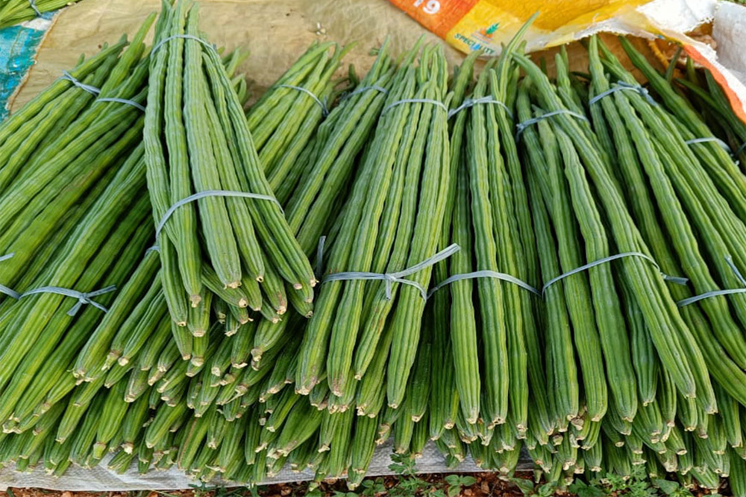
Drumstick, commonly known as Moringa (Moringa oleifera), is a fast-growing, drought-resistant tree native to South Asia, particularly India, and is widely cultivated in tropical and subtropical regions around the world. Often referred to as the “miracle tree”, drumstick is valued for its nutritional, medicinal, and agricultural benefits. Nearly every part of the tree—including the leaves, pods (drumsticks), seeds, flowers, and even bark—is edible or used in traditional remedies. The long, slender green pods, commonly known as drumsticks, are especially popular in Indian cuisine, often used in curries, sambhar, soups, and stews for their tender texture and mildly sweet flavor.
Nutritionally, drumstick pods are rich in vitamin C, dietary fiber, potassium, iron, calcium, and essential amino acids. The leaves, in particular, are a superfood, packed with vitamins A, B-complex, and E, protein, antioxidants, and anti-inflammatory compounds. Moringa is used in Ayurvedic medicine to treat over 300 ailments, including diabetes, anemia, high blood pressure, and digestive issues, due to its antibacterial, antifungal, anti-inflammatory, and detoxifying properties. The seeds are used to purify water and are also a source of Moringa oil, used in cooking, cosmetics, and skincare.